Tag: america

Variations on a Theme of Amy Cooper


The story has become well known. In August 1955, 14-year-old Emmett Till travelled from his home in relatively progressive Chicago to Jim Crow Mississippi to visit his extended family. Emmett was somewhat of a joker and whilst there he entertained his friends by telling them he had a white girlfriend back home in Chicago. To test him, his friends dared him to speak to a white woman, Carolyn Bryant, who was manning a nearby store. None of us can know for sure what happened between the two, records range from him whistling at her to him calling “Bye, baby” as he left. What is known is that on 28th August 1955, Emmett Till was abducted by Bryant’s husband and his half-brother, mutilated beyond recognition and murdered. A life, a child’s life was taken to protect and uphold the ego of a white woman. Sound familiar?

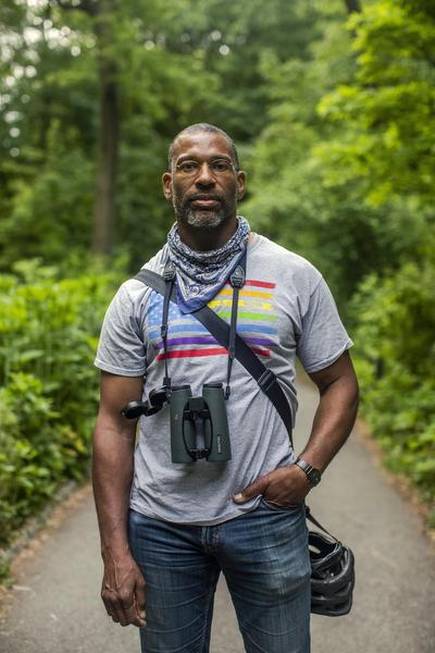
The Amy Cooper case has cycled through our social media feeds recently. The video of her calling the police on Christian Cooper (not related), an African American who asked her to put her dog on a leash in accordance with park rules, would be funny if it was not so eerily reminiscent of a historical trend. Her dog, which can be seen in the video writhing in her hands like something possessed, would definitely agree with me. Why did Amy Cooper say, with a smug tone and a self-assured flick of the head, “I’m gonna tell them [the police] there’s an African American man threatening my life”? The statement was a lie, including the man’s race did not make it any less of one. She knew however, that this racial reference would have power with the police. She had been socialised to expect to have her way, to dominate in a dispute against a black man. Her nation, and to some extent the world, had established the black man as a perpetual threat to and assailant of the white woman and it had become the role of the state to protect the illusionary white victim at all costs.

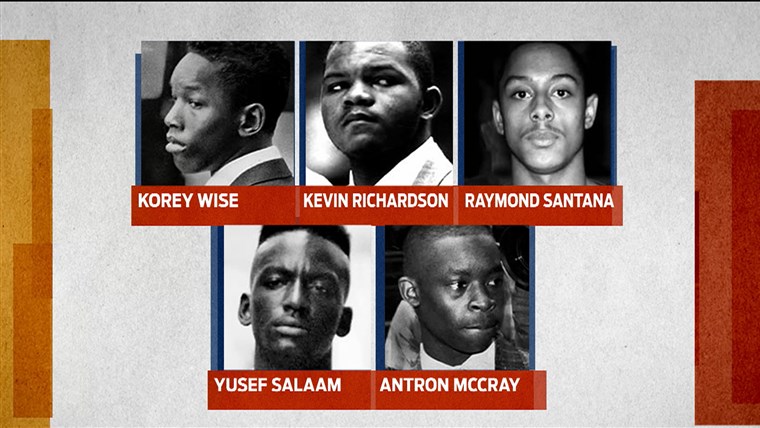
From ‘Othello’ and ‘To Kill a Mockingbird’ to ‘The Birth of a Nation’ and ‘Get Out’, literary and cinematic culture has not shied away from the tensions between black men and white women. The interaction in ‘Of Mice and Men’ between Curley’s wife, a white lady married to the boss’s son, and Crooks, the negro labourer, still terrifies me four years on from GCSE English. Curley’s wife tells Crooks, “I could get you strung up on a tree so easy it ain’t even funny”. The Amy Cooper case ain’t even funny either. The power dynamic between black men and white women that we see in literature and film is not a fiction-it reflects history and present-day society. The cases of the Scottsboro Boys, which reportedly inspired aspects of ‘To Kill a Mockingbird’, George Stinney, the Central Park 5 and Darryl Hunt are just a few examples. The recent incident involving ‘BBQ Becky’ is also strikingly similar to Amy Cooper’s.

It may seem like the cases of Emmett Till and Christian Cooper are more different than they are similar: Mr. Cooper was not killed, he was not even arrested. Amy Cooper complained to the state, not to vigilantes. However, when we consider the speedy acquittal of Till’s murderers and the fact that they remained legally innocent despite publicly confessing to their crimes, we realise that the police and judicial system of the time endorsed the actions of the killers. As Roy Wilkins, head of the NAACP, stated matter-of-factly, “the state of Mississippi has decided to maintain white supremacy by murdering children” [emphasis mine]. Thus we see in both cases a state that is known by its civilians to be unjust and violent against black males in particular. This knowledge allows white civilians to use the injustice and violence to their advantage. Amy Cooper knew very well that the police could come down there and shoot Christian Cooper where he stood. It has happened too many times before. Carolyn Brant confessed in 2007 that she had lied on the stand about what went down between herself and Emmett Till, that he did not harass her as she said he did. Amy Cooper lied to all our faces. Never underestimate the power of a white woman’s lie in a racist society.

stay curious and well read
Foreign Policy for One

If you haven’t read Pandora’s Box, find it here.

War means different things to different people. For some it is a thing to wield and for others it can only be run from or suffered. An inalienable characteristic of war is that often those who wield it are not the ones who bear the brunt of its life-shattering power. That’s something I try to convey in the poem: the plane flies away after dropping the bomb (Pandora’s box, get it?) seemingly untouched by the devastation it causes. Likewise, those in the upper echelons of government are rarely forced to embody the consequences of the wars they start or withdraw from. This is especially the case when the conflict is a proxy war, such as the Syrian civil war. A proxy war is a war in which several actors have an interest in the outcome of the conflict and therefore use their resources to influence it, but are not directly involved. 

Trump’s tactics

This unequal state of affairs cannot really be helped. What worries me is that, in some cases, the geographical and emotional distance of decision-makers from the impact of war seems to engender a flippancy on issues where flippancy is at best, insensitive, and at worst, destructive.  This is strikingly apparent in Trump’s tendency to conduct foreign policy through Twitter; in December 2018 he abruptly tweeted that all US troops in Syria would be withdrawn. Social media not only extends the distance described above but is also isolating. 280 characters is like a narrow corridor; its width is the width of one person. You cannot fit your advisors and heads of department whose counsel is contrary to your wishes in the corridor. Neither can you fit your allies: the vulnerable groups who were not expecting your support to be suddenly withdrawn, or the countries looking to yours to set the example for strategy. Strategy? There’s no room for that in this corridor. Thus these unilateral decisions lead to fear, insecurity and resignations.

Due to the fact that, as mentioned above, the Syrian conflict is a proxy war, many, many actors would have been affected by the withdrawal Trump was proposing. Most importantly, the prospect of losing their strongest ally shot fear through the hearts of the Syrian Kurds who would have been left almost defenceless against Islamic State, Turkey and the Syrian government. It is generally believed that, contrary to the President’s statements, Islamic State has not yet been defeated and any withdrawal could have made Syrians once again vulnerable to the extreme terrorism that punctuated the civil war. This would have been compounded by the loss of Mercy Corps, a humanitarian organisation, who stated that without the US ground forces they would not have the security to provide assistance freely. In the poem I used the metaphor of a heart rising up in someone’s chest as they fall to evoke the unease of an impending doom you are powerless to avoid; perhaps some of the Kurdish fighters or Syrian civilians felt that way when they heard of Trump’s news. All these complexities, all this interwoven cause and effect, is in my mind like Pandora’s box falling from the sky and transforming from a concrete, knowable object into an abstract feeling of confusion-for those on the ground it is inexplicable why they should suddenly lose aid and protection and face an increasing frequency of terror attacks and…

‘Hold on a second!’, I hear you protest, ’None of this actually happened, Trump reversed his decision, remember?’ Even so, the unilateralism and instability that permeated this decision-making process remain. This is evident in the president’s subsequent declaration that he would also be withdrawing a large proportion of troops from Afghanistan. Furthermore, with the resignation of not only the US Defence Secretary but also the Pentagon chief of staff, Kevin Sweeney, things could get worse. The Pentagon had managed to steer the ship of US foreign policy amidst the turbulent waters of Trump’s tweets but the loss of these officials will have inevitably made steering much harder. Thankfully, some decisions can be taken back but once Pandora’s box is well and truly opened, while those in the plane fly away unscathed, those on the ground won’t be so lucky.

Click here for an update on this issue.

stay curious and well read