
Holding connectivity hostage: the damage done by Internet shutdowns

If you have not yet read Trapped, read it first here.

If you were told you would lose access to the internet tomorrow, what would be your first concern? Many facing government-imposed internet shutdowns are worried about more than just their social media presence; their ability to voice their political views or run their businesses is being threatened. Governments use flowery language to justify the shutdowns, citing ‘public safety’ and ‘national security’. Translated into the language of civilians that means protests, political chaos and widespread dissatisfaction. The primary purpose of the internet shutdowns is to prevent the organisation of mass demonstrations and other forms of opposition. According to Access Now, a nonprofit that promotes digital rights internationally, there were 196 shutdowns last year and have been 85 so far this year. An increasing number of regimes in Africa and Asia, including Zimbabwe, Ethiopia and India, seem to have taken a page out of the books of Chinese, Russian and North Korean governments by manipulating internet access to quell freedom of speech and the sharing of information. Unfortunately for them, political opposition generally endures their attempts to squash it, as groups resort to more traditional methods of mobilisation. Nevertheless, the businesses and economies of these countries may not be as resilient as protesters when it comes to being disconnected.

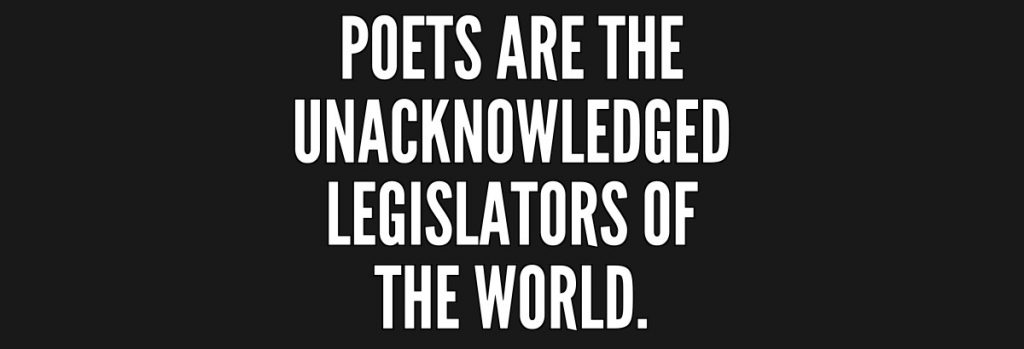
The recent internet shutdowns in Sudan are different to past occurrences because they appear to be synchronised with the atrocities committed by government forces. For example, the internet was completely shut down for 36 days between June 3rd and July 9th while mass killings and other violence was taking place. Here the purpose was clearly to prevent word of the attacks reaching the ears of the international community, and to prevent people in Sudan uniting against their attackers. Reportedly, these forces would also destroy protestors’ mobile phones while they broke up demonstrations. I have tried to capture this sense of helplessness in the poem above; perhaps the feeling of being attacked by your government and unheard by the rest of the world is like being in a room in which the walls are closing in but no one can hear your cries for help.

Another striking example of this economic self-sabotage is the case of Cameroon’s Silicon Mountain. Anglophone Cameroonians have been protesting against political and economic discrimination by the predominantly Francophone government since 2016. Between 17th January and 20th April 2017 the government decided to answer these protests with digital discrimination: they imposed a sustained internet shutdown. This had a catastrophic effect on the country’s budding tech hub, Silicon Mountain, located in the southwest Anglophone region. Many start-ups were forced to close as entrepreneurs lost contracts, and other innovators moved to Europe or the United States for work. Silicon Mountain, and more importantly, Cameroon, lost some of the great minds it needs for technological and economic advancement. According to the Collaboration on International ICT Policy in East and Southern Africa (CIPESA) the cost of the 93-day shutdown was $38.8m USD.

To read more about the economic and business costs of these internet shutdowns, please read my extended article at Young Leverage.

stay curious and well read
Word from a reluctant prophet

In an earlier post I discussed Trump’s tweeting about the Syrian civil war and explained why his reversal on the decision to withdraw American troops was no cause to relax. I predicted that eventually, Trump’s decisions would have consequences that are not so easily reversed.

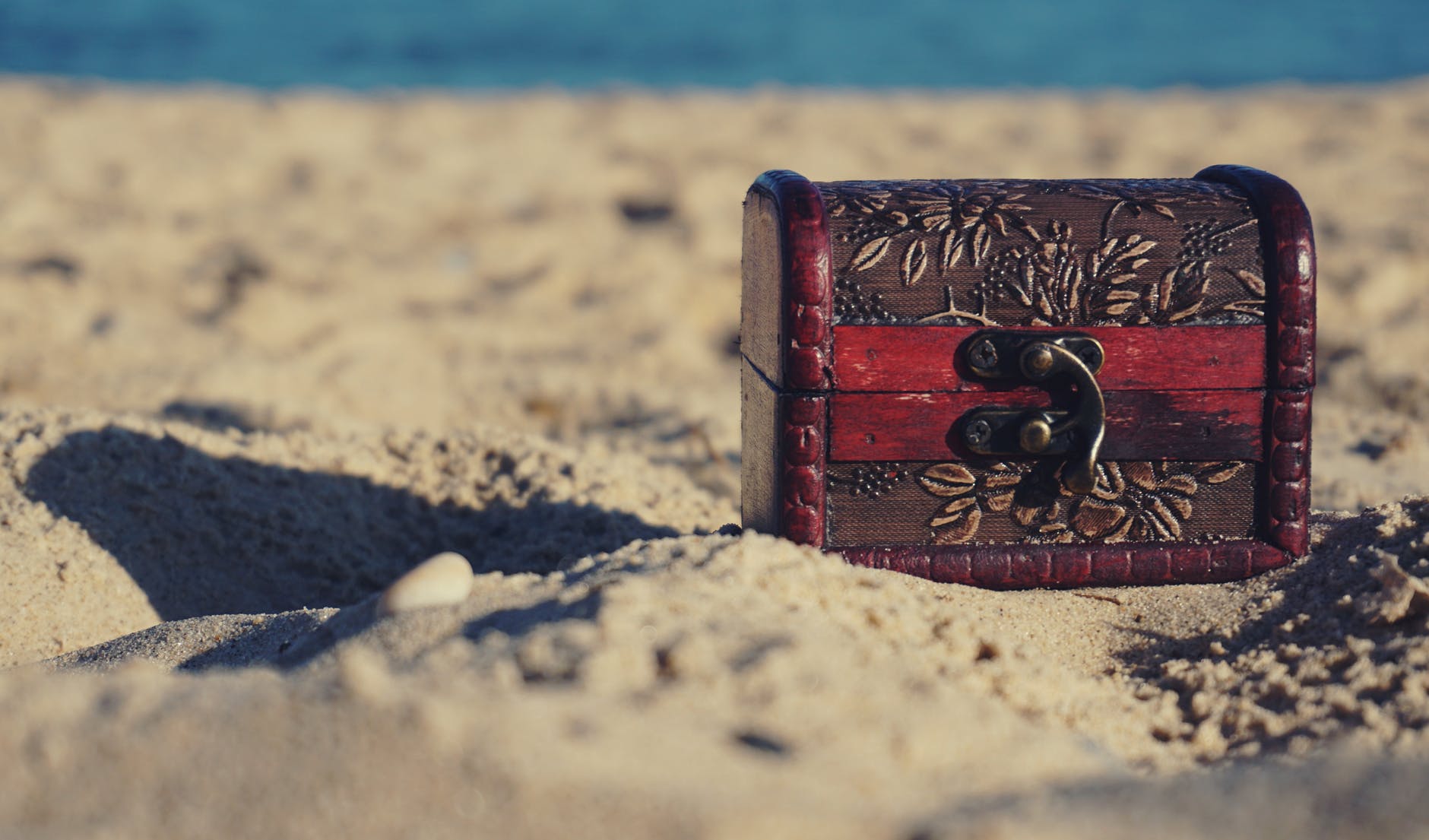
Well unfortunately, these predictions have come true. Trump recently deserted the Kurds in Syria which triggered a spiral of events, including a Turkish offensive into the Kurdish region of Syria and, reportedly, the escape of perhaps hundreds of Islamic State prisoners. Pandora’s box probably hasn’t even reached the ground yet.

stay curious and well read

Pandora’s box

Tomorrow they will rise, expecting the yellow of the sun and the ring of life laughing as it plays in the streets.

Pandora’s box

I always think it’s more fun to read a poem without any blurb or description beforehand. A blurb might curtail your imagination and we wouldn’t want that. However, I will refer to and expound on some parts of the poem in the reflection section so you can see my interpretation. 

Also, if you would like to experience the poem the way I do, re-read the penultimate stanza a few times on a loop as quickly as you can, then read the last stanza.

Also, comment down below if you know the piece of literature that I quote from in the poem.


A solitary plane in the moonlight.
The stars are quiet, burning softly.
For they know not what comes.
 
What the plane has unleashed into the night:
A box. Just a simple box. Falling slowly.
 
As it descends its borders seem to blur until it transforms from an
object into an emotion
Now there is only the sense of falling, the tremor, the confusion
of the
heart as it is 
displaced 
from its home in the haven of the chest,
as it rises to the throat and hovers there, quivers there, 
expectant
 
       It lands; but it does not yet wake the sleepers.
Tomorrow they will rise, expecting the yellow of the sun and the ring of
life laughing as it plays in the streets.
 
But the box is open now, and it is their hearts that quiver as the earth falls:
 
weeping, no sun but violence in the sky the wind writhing in torment tearing the clouds asunder the elements furious, a voice was heard in Ramah lamentation and bitter...


They seek the source, scour and search.
But the box is fragments now, broken by its own power.
They are left to quiver and to fall and to burn
Whilst a solitary plane flies silent amongst the tumult of the skies.

Now onto the reflection.

stay curious and well read

Foreign Policy for One

If you haven’t read Pandora’s Box, find it here.

War means different things to different people. For some it is a thing to wield and for others it can only be run from or suffered. An inalienable characteristic of war is that often those who wield it are not the ones who bear the brunt of its life-shattering power. That’s something I try to convey in the poem: the plane flies away after dropping the bomb (Pandora’s box, get it?) seemingly untouched by the devastation it causes. Likewise, those in the upper echelons of government are rarely forced to embody the consequences of the wars they start or withdraw from. This is especially the case when the conflict is a proxy war, such as the Syrian civil war. A proxy war is a war in which several actors have an interest in the outcome of the conflict and therefore use their resources to influence it, but are not directly involved. 

Trump’s tactics

This unequal state of affairs cannot really be helped. What worries me is that, in some cases, the geographical and emotional distance of decision-makers from the impact of war seems to engender a flippancy on issues where flippancy is at best, insensitive, and at worst, destructive.  This is strikingly apparent in Trump’s tendency to conduct foreign policy through Twitter; in December 2018 he abruptly tweeted that all US troops in Syria would be withdrawn. Social media not only extends the distance described above but is also isolating. 280 characters is like a narrow corridor; its width is the width of one person. You cannot fit your advisors and heads of department whose counsel is contrary to your wishes in the corridor. Neither can you fit your allies: the vulnerable groups who were not expecting your support to be suddenly withdrawn, or the countries looking to yours to set the example for strategy. Strategy? There’s no room for that in this corridor. Thus these unilateral decisions lead to fear, insecurity and resignations.

Due to the fact that, as mentioned above, the Syrian conflict is a proxy war, many, many actors would have been affected by the withdrawal Trump was proposing. Most importantly, the prospect of losing their strongest ally shot fear through the hearts of the Syrian Kurds who would have been left almost defenceless against Islamic State, Turkey and the Syrian government. It is generally believed that, contrary to the President’s statements, Islamic State has not yet been defeated and any withdrawal could have made Syrians once again vulnerable to the extreme terrorism that punctuated the civil war. This would have been compounded by the loss of Mercy Corps, a humanitarian organisation, who stated that without the US ground forces they would not have the security to provide assistance freely. In the poem I used the metaphor of a heart rising up in someone’s chest as they fall to evoke the unease of an impending doom you are powerless to avoid; perhaps some of the Kurdish fighters or Syrian civilians felt that way when they heard of Trump’s news. All these complexities, all this interwoven cause and effect, is in my mind like Pandora’s box falling from the sky and transforming from a concrete, knowable object into an abstract feeling of confusion-for those on the ground it is inexplicable why they should suddenly lose aid and protection and face an increasing frequency of terror attacks and…

‘Hold on a second!’, I hear you protest, ’None of this actually happened, Trump reversed his decision, remember?’ Even so, the unilateralism and instability that permeated this decision-making process remain. This is evident in the president’s subsequent declaration that he would also be withdrawing a large proportion of troops from Afghanistan. Furthermore, with the resignation of not only the US Defence Secretary but also the Pentagon chief of staff, Kevin Sweeney, things could get worse. The Pentagon had managed to steer the ship of US foreign policy amidst the turbulent waters of Trump’s tweets but the loss of these officials will have inevitably made steering much harder. Thankfully, some decisions can be taken back but once Pandora’s box is well and truly opened, while those in the plane fly away unscathed, those on the ground won’t be so lucky.

Click here for an update on this issue.

stay curious and well read

I’m Abigail, nice to meet you.

Here I am in my favourite reading position…


Hello there, thanks for coming! My name is Abigail and welcome to ‘The World in Verse’. I created this blog primarily for selfish reasons (sorry). I wanted a space where I could practise my writing whilst also getting feedback from the general public. I want to think more critically about the world I live in and be more productive with my thoughts. Hopefully, you’ll enjoy what you read and your thinking will be stimulated too. Engage as much as possible with my posts, critique is welcome (and nice comments). I would love to hear your responses to my poems, how they make you feel, how you interpret them. Go crazy in the comments!

Kinds of topics my blog will cover:

  • Lots of fascinating things.
  • I will not spoil the surprise by listing them here.
  • I’ve already said too much.

stay curious and well read